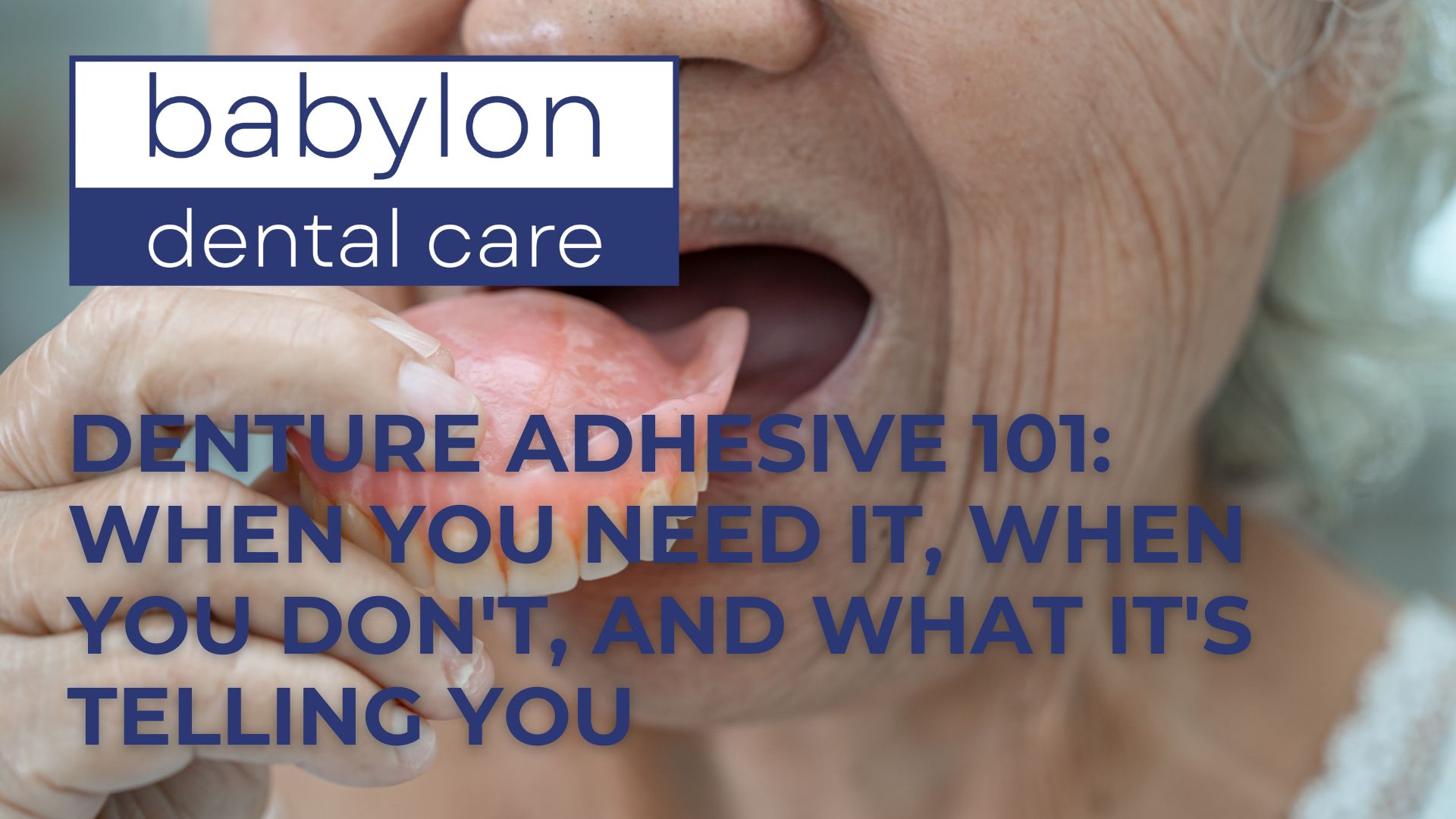
Walk down a pharmacy aisle and you’ll see that there are lots of denture adhesive options. Each one promises a secure fit—and sometimes it delivers. But if you reach for it more and more, your mouth may be sending you a message. Here’s what we know about what adhesive can and cannot do, how to use it safely, and what heavy use might mean.
What Denture Adhesive Actually Does (and Doesn’t Do)
Adhesive helps a denture stay put and keeps food from slipping underneath. A 2021 review found that it can improve retention, bite force, and chewing in people with full dentures. It may also help if you have a dry mouth. No single product is the best denture adhesive for everyone, but the ADA Seal is a good check, because makers earn it by showing their product improves hold without damaging the denture.
What adhesive cannot do is fix a poor fit—and properly fitted dentures usually do not need it. The jawbone gradually shrinks after tooth loss, and dentures loosen. Adhesive fills those gaps and offers temporary relief, but it does not rebuild bone or reshape the denture.
How to Apply and Remove Denture Adhesive the Right Way
A few habits keep adhesive working and safe:
- Start with a clean denture – Apply adhesive to a clean denture, then press it into place and hold it for a few seconds.
- Use small amounts – With denture adhesive cream, the American College of Prosthodontists recommends three to four pea-sized dabs per denture. Oozing means you used too much.
- Remove the denture at night – Taking it out gives your gums and bone a chance to rest.
- Clean it all away each day – Gently scrub the denture with a soft brush and warm water (never hot), and wipe your gums and palate with a damp cloth or soft brush.
The FDA also suggests marking a calendar when you open a new tube. One 2.4-ounce tube should last seven to eight weeks for someone with upper and lower dentures.
When Heavy Adhesive Use Signals a Bigger Problem
If you have become a heavy adhesive user, here are a few signs that you might need to see a dentist about your dentures:
- You need adhesive to eat
- You use adhesive to keep your denture in place around other people
- You apply adhesive more than once a day
- You have sores under the denture
- Your denture is older than five years
Those signs usually point to loose dentures or ill-fitting dentures. Your jaw keeps changing shape after teeth come out, and your gums change too. Adhesive can hide a loose fit, but prolonged use of an ill-fitting denture can cause sores and bone loss. Even the strongest denture adhesive cannot fix a base that no longer matches your gums.
It’s also worth noting that some adhesives contain zinc, and the FDA says they are safe in moderation as directed. Overuse is the concern. Case reports link heavy, long-term use—at least two tubes a week—to nerve damage. However, the FDA has not found conclusive evidence of problems when people follow the label. The main denture adhesive poisoning symptoms to look out for are numbness or tingling in the hands and feet. If you notice them, stop using the product and call your doctor. Some people choose a zinc free denture adhesive, and many prosthodontists recommend avoiding zinc as a precaution.
Is It Time for a Reline or Implant-Retained Denture Instead?
A denture reline refits the gum side of your denture with fresh material so it matches your changed gums. Ask your dentist rather than buying a kit, since prosthodontists advise against over-the-counter reline kits. Relines work best when enough jawbone remains. If your denture is old or very loose, a new one may serve you better, since dentures often need remaking after five to ten years.
When bone loss causes a denture to move, especially a lower one, ask about implant-retained dentures. Small titanium posts in the jawbone give the denture something to snap onto, and oral surgeons say this kind of denture stabilization can eliminate the need for sticky pastes. It involves surgery and months of healing, so your dentist will check whether you qualify.
Start With a Fit Check
Adhesive is a tool, not a cure. As such, it’s worth having your fit checked if you use it daily. Babylon Dental Care can examine your dentures and gums and explain whether a reline or new dentures suit you best—or whether you might be a good candidate for dental implants. Our team can also review payment options with you. Call us at (631) 983-6665 to schedule a visit.