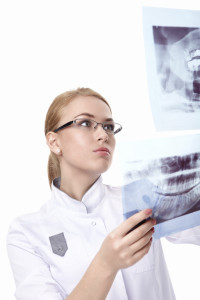
 X-rays are used to diagnose dental problems and help dentists make informed treatment recommendations. They can detect underlying problems such as tooth decay, injuries, impacted wisdom teeth, disease, bone loss, and other threats to patients’ oral health.
However, in recent years, the safety of dental X-rays has been called into question, as more patients worry about their exposure to radiation. Many people wonder whether X-rays are safe and whether they should allow their children to have them done at dental appointments.
Are dental X-rays safe?
The X-rays that are taken today are very different – and much safer – than in years past. Today, we use digital X-rays where there is very little radiation exposure involved with each X-ray, and because we now know more about the potential dangers of radiation exposure, we know how to take precautions that make getting X-rays much safer.
We also know that X-rays should be used prudently; we believe in weighing the benefits before taking X-rays. Frequently, the benefit of detecting conditions that threaten the patient’s oral health far outweighs the small amount of radiation the patient is exposed to when we use digital X-rays at our dental office.
When are X-rays needed?
A patient may receive X-rays during his or her first dental exam in order to provide the dentist with a point of reference to determine whether the patient’s condition has changed over time. Additional X-rays may be taken periodically to monitor certain conditions. Patients who are interested in getting dental implants, braces, or other appliances will also need digital X-rays or Panorex X-rays beforehand.
X-ray precautions
 There are certain precautions that should be taken to keep the patient as safe as possible when taking X-rays. These include:
- Wearing a lead apron to protect the patient’s chest and abdomen
- Wearing a thyroid shield to protect the thyroid gland
It is important to remember that X-rays are often the best way to diagnose dental problems. When the right steps are taken, digital X-rays are a safe diagnostic tool that can improve and protect patients’ oral health.