
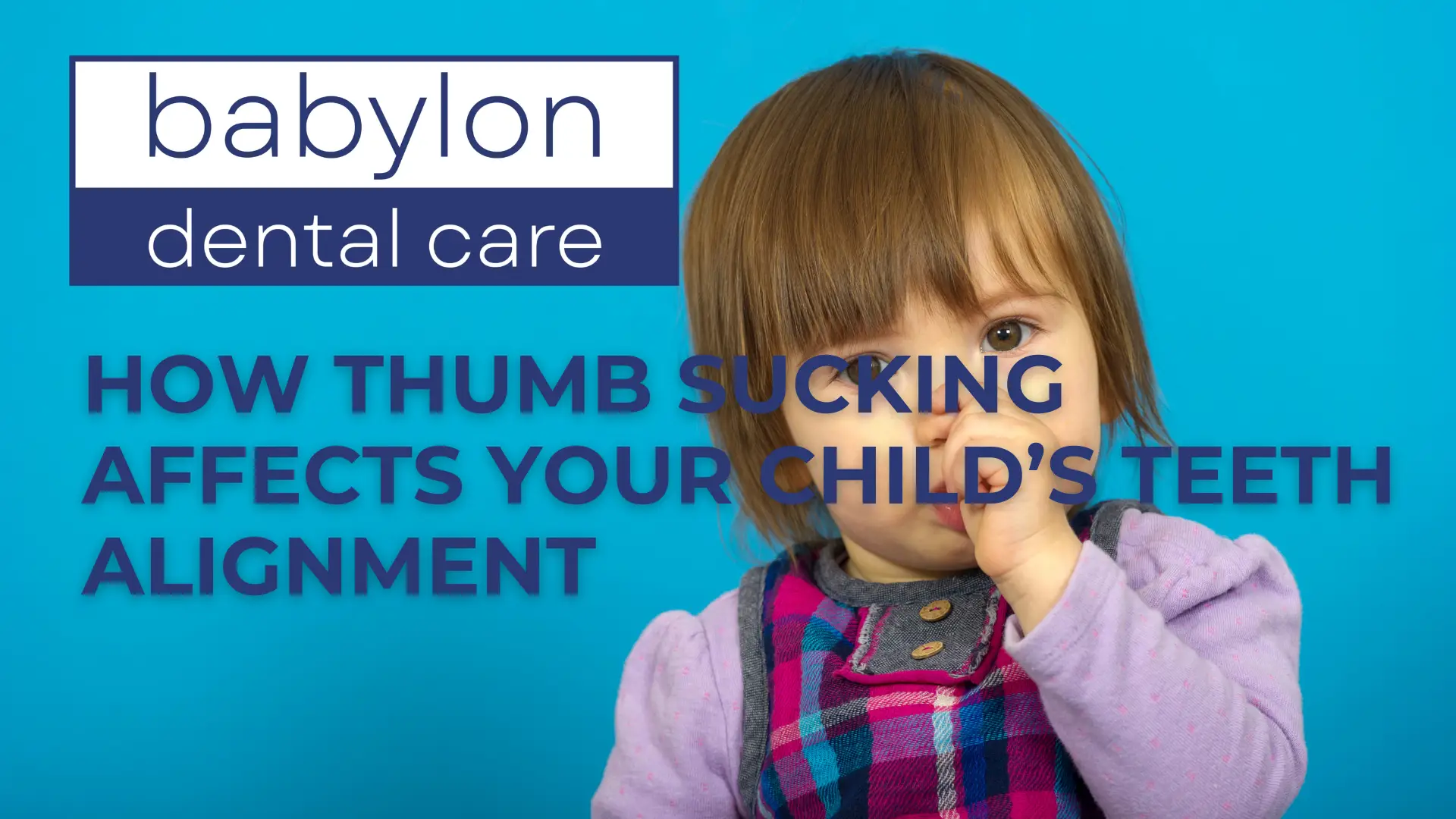
Thumb sucking comes naturally to babies and toddlers, and most parents don’t think twice about it. For most kids, the habit fades on its own well before they reach school age. But for others, it can persist long enough to shape how the teeth and jaws develop. Here’s what you should know about how thumb sucking can affect teeth alignment and how to help your kid move past it.
How Thumb Sucking Affects Teeth and Jaw Development
When a child keeps a thumb in their mouth for hours a day, it can put steady pressure on their teeth, gums, and the roof of their mouth. Over time, that can shift how teeth grow in and how the jaw forms.
So, does thumb sucking affect teeth in a lasting way? With prolonged or intense sucking habits, it certainly can. Common thumb sucking dental problems include changes to bite alignment and tooth position that the body can’t self-correct.
One common issue is an open bite from thumb sucking. This happens when front teeth fail to meet properly, leaving a visible gap even when the jaw closes. Overjet and thumb sucking often go together, too, when the upper front teeth are pushed forward and out of alignment.
Palate development in children can also take a hit from unrestricted thumb sucking. Constant pressure from a thumb can narrow the roof of the mouth, which may affect both tooth spacing and breathing patterns. Over time, this narrowing can even contribute to speech problems from thumb sucking.
Teeth misalignment from thumb sucking doesn’t always show up right away. Baby teeth might look fine even as the underlying jaw and bone structure absorb the effects. These changes often become clear only once permanent teeth start to emerge, so early awareness is extremely important for parents.
At What Age Does Thumb Sucking Become a Dental Problem?
Most dentists agree that occasional thumb sucking before age two or three rarely causes lasting harm.
Teeth alignment in toddlers usually isn’t a major concern during infancy or early toddlerhood. Baby teeth have room to shift back into place if children stop the habit early enough. The risks increase once permanent teeth start to come in, usually starting around age five or six.
Many parents wonder when to stop thumb sucking for teeth as their children approach school age. It’s worth understanding that prolonged thumb sucking past age four or five raises the chances of malocclusion in children and can affect both baby teeth and the permanent teeth underneath.
Early orthodontic evaluations can help parents understand whether a current thumb-sucking habit poses any real risk. When dentists catch potential issues early on, they often have more options for gentle, effective correction.
How to Help Your Child Stop Thumb Sucking

Breaking a long-standing habit takes patience, consistency, and the right approach for each child. The following strategies tend to work well for many families:
- Offer Gentle Reminders: Positive reinforcement works better than scolding, so praise progress instead of focusing on setbacks.
- Identify Triggers: Many kids suck their thumbs when they’re stressed or bored, or when they sleep. Addressing known triggers is a great way to reduce the habit.
- Try a Visual Chart: A sticker chart can give younger kids a fun way to track progress toward a healthier routine.
- Consider a Pacifier Swap: Pacifier vs. thumb sucking for teeth comparisons show pacifiers are often easier to phase out over time since parents can control access to pacifiers.
- Ask About Dental Appliances: Orthodontic treatments for thumb sucking sometimes include small oral appliances that discourage the habit.
Childhood oral habits like thumb sucking often respond well to a combination of patience at home and professional guidance from a trusted pediatric dentist. Dental development in children takes place over many years, so even the effects of a stubborn habit can improve with the right support.
Let Us Help You Support Your Child’s Dental Development
With the right guidance and support, parents can address thumb sucking and crooked teeth before they turn into long-term problems. At Babylon Dental Care, our pediatric dentistry team helps families work through habits like thumb sucking with patience and care. When you bring your child to us for routine dental care visits, we can check for early signs of bite or alignment issues and address them the right way.
Contact us now to learn more about our pediatric dentistry services. Let us help your child build a healthy, confident smile. Call (631) 983-6665 today or click here to view our current appointment openings.