
Every parent wants to keep their child safe on the field, the court, and the rink. Helmets and pads get a lot of attention in youth sports, but one of the most important pieces of protective gear is also one of the smallest: a kids’ sports mouthguard.
What Is a Kids’ Sports Mouthguard and How Does It Work?
A sports mouthguard is a soft, flexible appliance that fits over your child’s teeth and gums. It absorbs and distributes the force of impact during contact sports to protect the teeth, lips, gums, and jaw.
Without a mouthguard, a hit to the face can easily crack or knock out teeth and even cause jaw fractures. The right mouthguard, however, can cushion much of that force before it can do real damage. Think of it as a shock absorber for your child’s smile.
Which Sports Require a Mouthguard for Kids?
Certain youth sports organizations require mouthguards by rule. Check with your child’s league or governing body to confirm their specific requirements. Mouthguards are often mandatory in:
- Football: Kids’ football mouthguards are mandatory at virtually every level of organized play.
- Hockey: Youth hockey mouthguards are required by USA Hockey for players at all age levels.
- Lacrosse: Mouthguards are required for most youth and scholastic lacrosse programs.
Many sports don’t require mouthguards, but that doesn’t mean your child’s teeth aren’t at risk. Consider investing in a mouthguard to protect your kid’s smile if they play contact sports like:
- Soccer: Youth soccer mouthguards aren’t always required, but dental injuries in soccer are far more common than most parents expect.
- Basketball: Kids’ basketball mouthguards are not universally required, but elbows and hardwood floors mean dental injuries are an ever-present risk in this sport.
- Martial Arts: Kids’ martial arts mouthguards are standard protective equipment in most disciplines, even if they’re not explicitly required.
- Baseball, Softball, and Gymnastics: These sports also carry a meaningful risk of oral injury.
Any sport that involves contact, speed, or the possibility of a fall can put your child’s teeth at risk. When in doubt, it’s better to have them wear one.
Stock, Boil-and-Bite, or Custom Fit: Which Type Is Right for Your Child?
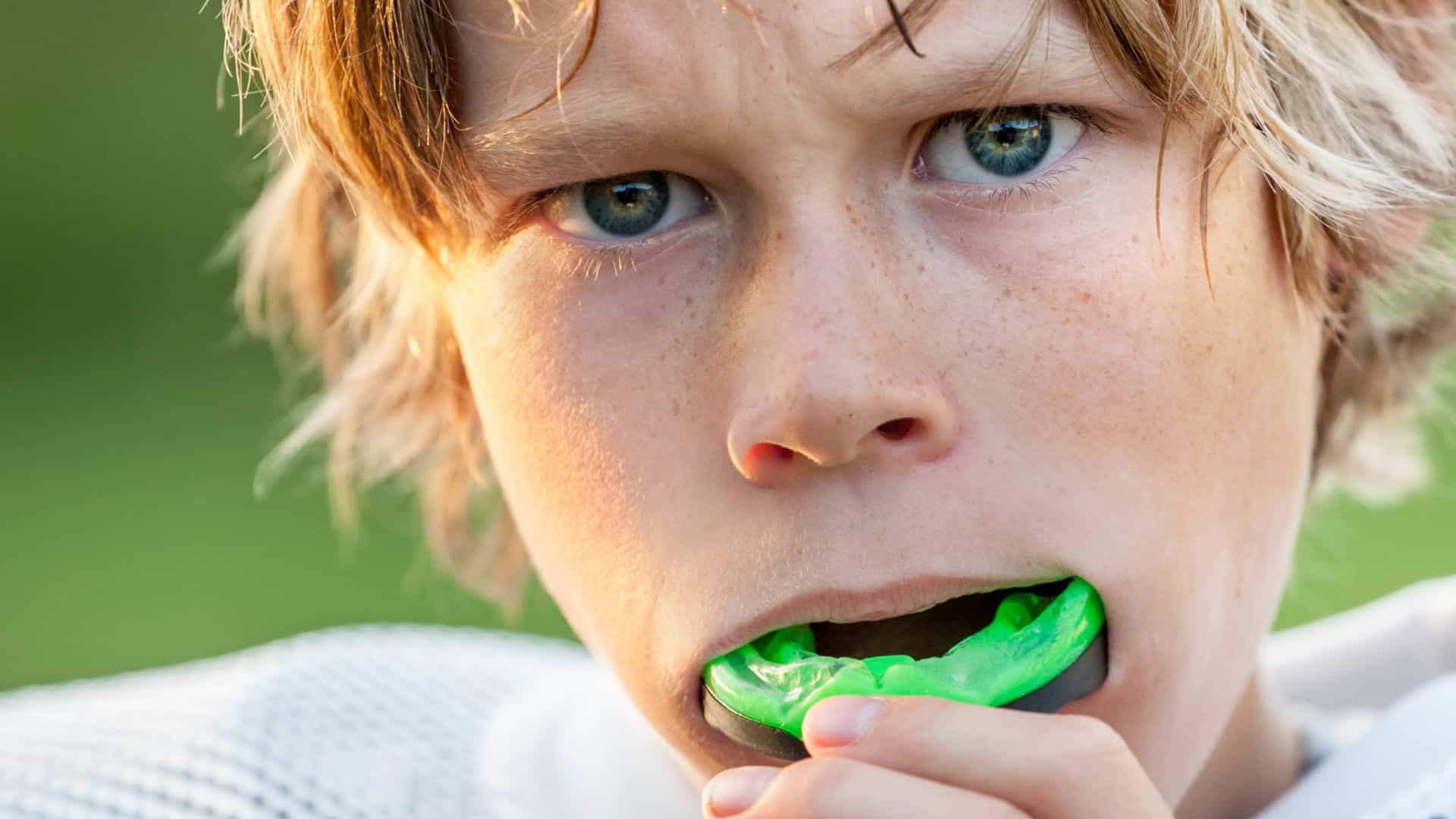
There are three main types of sports mouthguards available for kids, and they vary significantly in fit, comfort, and level of protection.
Stock Mouthguards
Stock mouthguards come pre-formed and ready to wear right out of the package. They’re inexpensive and widely available, but they offer the least protection. They won’t conform to your child’s teeth, which means they can be bulky, uncomfortable, and easy to spit out.
Boil-and-Bite Mouthguards
Boil-and-bite mouthguards for kids are a step up from stock mouthguards. With these mouthguards, you soften the material in hot water, then press it around your child’s teeth for a basic custom fit. They’re affordable and much more comfortable than stock options.
Custom-Fit Mouthguards
Custom-fit mouthguards for children are made from impressions taken at a dental office. They fit precisely, stay in place during play, and provide the best protection available. Custom-fitted and dentist-approved mouthguards for children consistently outperform over-the-counter options in both comfort and protective value.
A Note on Mouthguards for Kids with Braces
If your child is undergoing orthodontic treatment, a standard boil-and-bite option won’t work. Fortunately, there are special orthodontic mouthguards for young athletes that can accommodate brackets and wires without damaging them. Talk to your dentist about the right fit today.
At What Age Should Kids Start Wearing a Sports Mouthguard?
As soon as children start playing contact sports, it’s time to think about dental injury prevention for kids. That can be as early as age five or six for tee-ball, soccer, or youth martial arts.
Primary vs. Permanent Teeth
Some parents assume baby teeth don’t need protection, but they do. This is because injuries to primary teeth can affect the developing permanent teeth underneath them.
Once your child’s permanent teeth begin coming in, usually around age six or seven, protection is even more important. Permanent teeth don’t grow back, so they need reliable protection.
Growing Mouths and Replacement Schedules
Children’s mouths develop quickly. A mouthguard that fit well last season might not fit this season. Plan to have your child’s mouthguard checked or replaced regularly at their routine dental visits.
Protect Your Child’s Smile Before the Season Starts
At Babylon Dental Care, we provide gentle, comprehensive pediatric dentistry services to families across Long Island. Our team can fit your child with a custom sports mouthguard and answer your questions about dental injury prevention for kids.
Click here or call us at (631) 983-6665 to book your pediatric dentistry appointment now. We serve families from our two convenient office locations in West Babylon and Patchogue.