
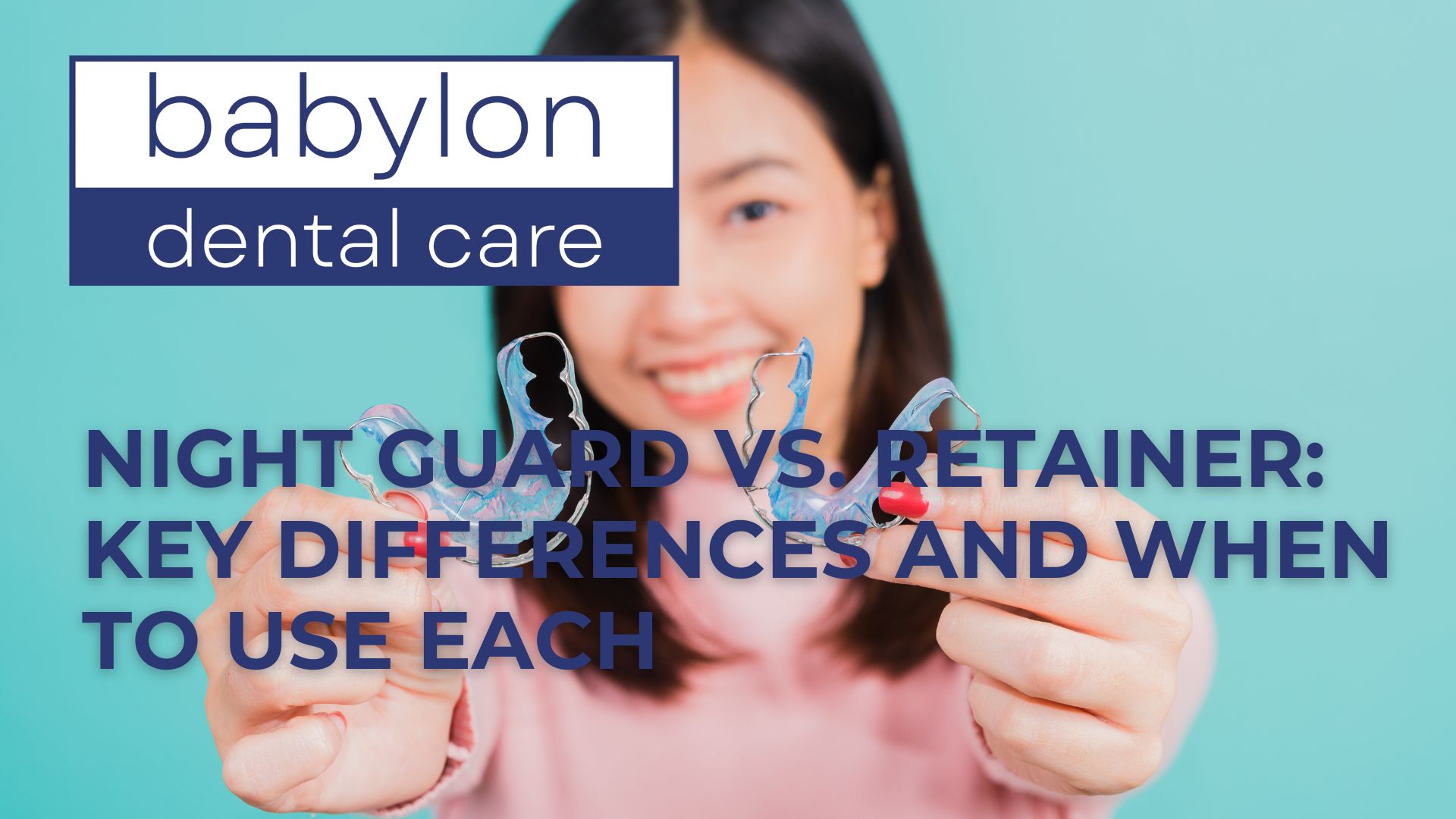
Night guards and retainers can look similar in the case on your nightstand, but they do very different jobs. Mixing them up—or skipping one when you need it—can undo months of dental work. Here’s how a night guard and a retainer compare, and when you might need each one.
Night Guard vs. Retainer: Key Differences at a Glance
The difference between a night guard and a retainer comes down to purpose and design.
What Does a Night Guard Do?
A night guard, also called an occlusal guard, cushions your teeth from grinding or clenching—a condition known as bruxism. Signs you grind your teeth at night include a sore jaw in the morning, headaches, and flattened or chipped teeth. Over time, untreated bruxism can cause enamel attrition, or gradual wearing of your tooth surface. It can also crack fillings and crowns. A night guard sits over your teeth like a thin shield, absorbing pressure that would otherwise wear down your enamel.
Does a night guard help jaw pain? Often, yes. Grinding places ongoing strain on the temporomandibular joint, which is the hinge that connects your jaw to your skull. A night guard reduces that strain by keeping your back teeth from making full contact. This can ease symptoms of temporomandibular joint disorder.
What Does a Retainer Do?
A retainer holds your teeth in place after braces or other orthodontic treatment. It doesn’t protect against grinding. Instead, it keeps your teeth from drifting back toward their original position while your jawbone settles into its new alignment.
Night guards tend to be thicker, since they need to absorb repeated force. Retainers are thinner and built to hold teeth still rather than withstand grinding pressure.
Retainers also come in different forms:
- An Essix retainer is a clear, removable plastic tray.
- A Hawley retainer uses a wire and acrylic base that you can take out for meals.
- A fixed lingual retainer is a thin wire bonded permanently to the back of your teeth.
What Happens If You Wear the Wrong Appliance: FAQ
Here are some of the most common questions people have about the proper use of night guards vs. retainers.
Can you use a retainer as a night guard?
Not safely. Most retainers are too thin to withstand the forces of grinding, and repeated pressure can quickly crack or warp them. A dedicated night guard is built for that job.
Can a night guard straighten teeth?
No. Night guards protect your teeth from damage. They aren’t designed to move teeth into new positions the way orthodontic appliances are.
What happens if you stop wearing your retainer?
Your teeth can drift, a process called orthodontic relapse. This can often happen within months of stopping retainer wear. Teeth continue settling into your jawbone for a while after treatment ends.
When You Need Both a Night Guard and a Retainer

Some patients need both appliances at once—and that’s completely normal. If you grind your teeth and also wear a retainer to prevent relapse, your dentist can help you manage both.
Many people with this combination of issues wonder, “Can you wear a night guard and a retainer together?” Not usually at the same time in the same arch, since layering two appliances can strain your jaw. Your dentist might instead recommend a combination appliance or a schedule that alternates use between the two.
How to Choose the Right Appliance for Your Needs
The right appliance depends on what your teeth actually need rather than which one seems more convenient.
- Hard vs. soft night guard – Hard guards suit severe grinders who need maximum protection, while soft guards work better for mild cases and daily comfort.
- Dual laminate material – This combines a hard outer shell with a soft inner layer, offering durability and comfort for moderate to severe grinding.
- Removable vs.. fixed retainers – Removable retainers, like Essix or Hawley styles, offer flexibility, while a fixed lingual retainer stays in place without daily effort.
With proper care, most night guards last two to five years before the material wears down.
Contact Us Today for a Bite Examination
Whether you need a night guard, a retainer, or both, the right fit starts with an exam. The team at Babylon Dental Care can check your bite and look for signs of grinding or shifting teeth. We’ll be happy to recommend the appliance that fits your needs. Schedule a consultation or explore our full range of dental services, or call (631) 983-6665 to get started.