
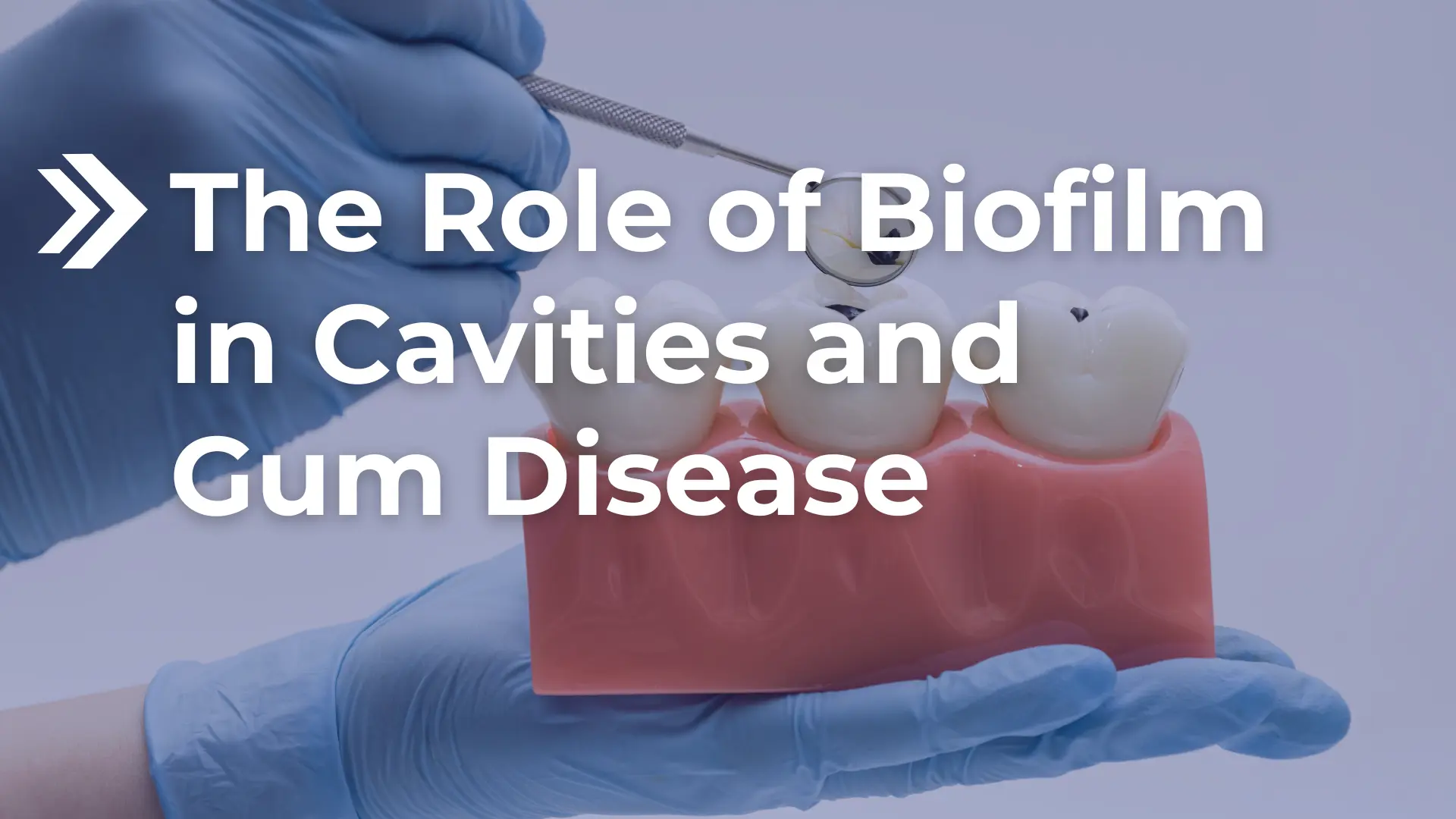
You have probably heard of plaque, but you may not be as familiar with the term “biofilm.” Biofilm is actually what plaque is: a dense, sticky community of bacteria that clings to your teeth and gums. Once you know how biofilm forms and what it does, you’ll better understand why cavities and gum disease develop in the first place.
What Is Dental Biofilm, and How Does It Form?
Dental biofilm is a structured community of microorganisms that attaches to the surfaces of your teeth and gums. It sounds complex, but you know it by a simpler name: plaque. That fuzzy, sticky film you feel on your teeth in the morning? That’s biofilm.
Biofilm forms quickly and in stages. First, proteins from your saliva coat the surfaces of your teeth, forming what scientists call a “pellicle.” Bacteria then attach to this pellicle and begin multiplying. As the colony grows, the bacteria produce a protective matrix of sugars and proteins. This matrix shields them from saliva, antibiotics, and even your toothbrush.
A biofilm colony becomes well-established within 24 to 48 hours. Left undisturbed, it matures and becomes increasingly difficult to remove. Over time, it hardens into tartar, which only a professional cleaning can eliminate.
It’s also important to know that everyone develops biofilm. It is a natural part of having a mouth full of bacteria. The key is disrupting it regularly before it causes severe damage to your teeth and gums.
The Science Behind Plaque Biofilm in the Oral Cavity
Your mouth hosts hundreds of bacterial species at any given time. Most are harmless, but certain strains can cause real damage when biofilm provides the right environment for them to thrive.
Bacteria within a biofilm communicate with each other through a process called quorum sensing. This technique allows them to coordinate behavior, share nutrients, and strengthen their collective defenses. Think of it less like a random collection of germs and more like an organized community working toward a common goal, similar to a colony of ants.
As biofilm matures, it develops distinct layers. Deeper layers become oxygen-deprived, which encourages the growth of anaerobic bacteria. These particular bacteria produce especially harmful byproducts that attack gum tissue and bone. This layered structure also makes mature biofilm significantly harder to remove than early-stage plaque.
How Dental Biofilm Contributes to Cavities and Gum Disease
Biofilm does its damage in two primary ways: Driving cavity formation and triggering gum disease.
When you eat sugary or starchy foods, bacteria within the biofilm feast on those sugars and produce acid as a byproduct. That acid attacks your tooth enamel throughout the day. Over time, this acid erosion breaks down enamel and creates cavities. The bacteria most responsible for this process, particularly Streptococcus mutans, thrive within the protective biofilm.
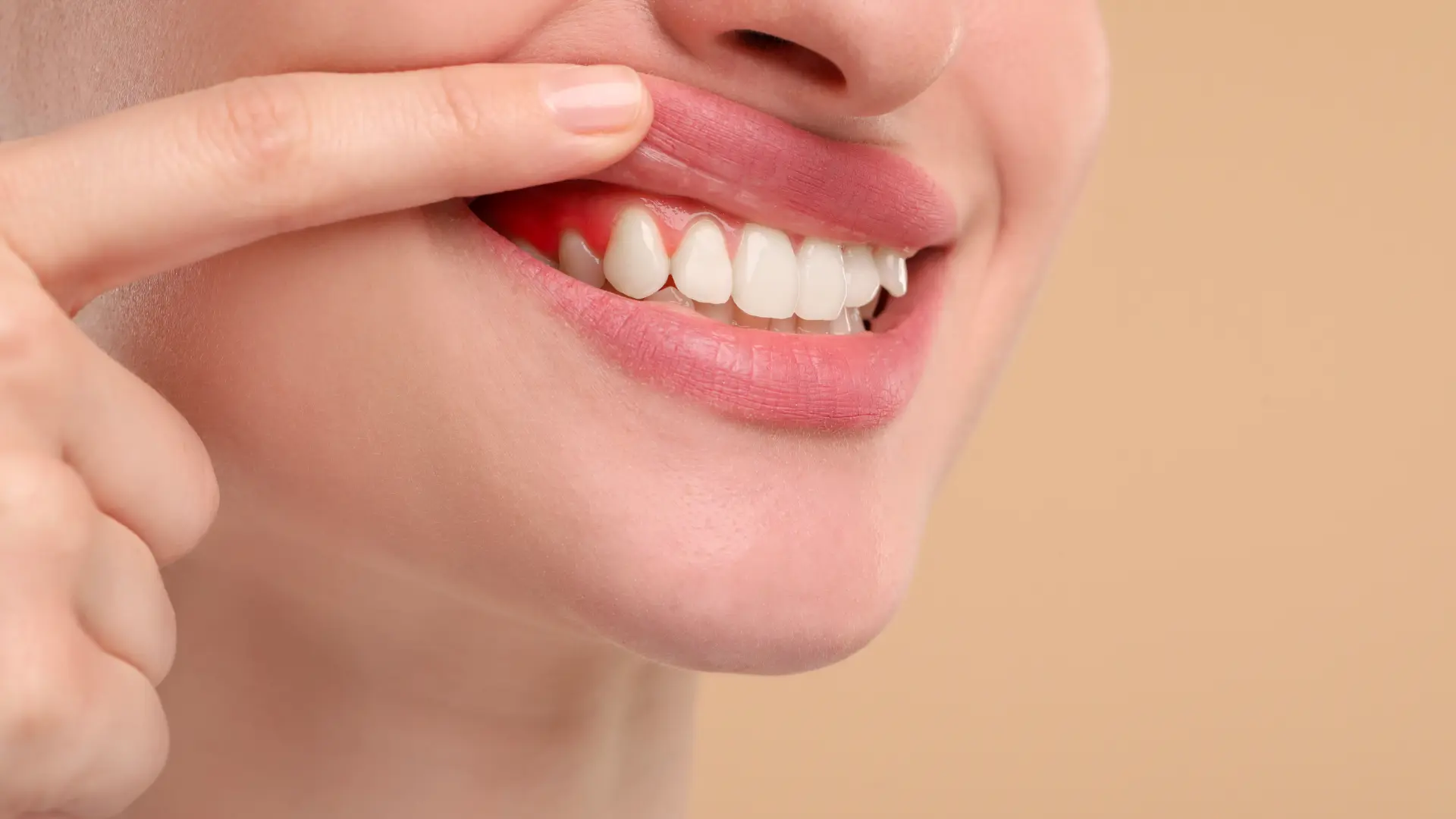
Biofilm also causes gum disease through a similar but distinct method. In this process, bacteria in biofilm release toxins that irritate and inflame the gum tissue. Your immune system responds by sending inflammatory signals to fight the infection. Unfortunately, this immune response can damage the surrounding gum tissue and bone just as much as the bacteria themselves. Early-stage gum disease, known as gingivitis, can progress to periodontitis if biofilm continues to accumulate along and beneath the gumline.
In both cases, the real danger lies in undisturbed biofilm. The longer it stays in place, the more destruction it causes.
Tips for Preventing Biofilm Buildup in Your Mouth
While you can’t entirely prevent biofilm from forming in your mouth, proper precautions can help you minimize its growth and avoid potential dental complications. Here are a few tips to follow:
- Brush twice a day thoroughly – Use a soft-bristled toothbrush and fluoride toothpaste to physically disrupt biofilm before it matures. Pay particular attention to the gumline, as it’s an area where biofilm loves to accumulate.
- Floss every day – Your toothbrush cannot reach the tight spaces between your teeth. Daily flossing removes biofilm from these vulnerable areas before it hardens into tartar.
- Watch your sugar intake – Limiting sugary and starchy foods starves harmful bacteria of their preferred fuel source, reducing acid production and slowing biofilm growth.
- Visit your dentist regularly – Professional cleanings remove hardened tartar that brushing and flossing cannot tackle on their own. Your dental team can also spot early warning signs of biofilm-related damage before it progresses.
Worried About Biofilm Buildup in Your Mouth? Call Babylon Dental Care Today
Plaque in your mouth is a common cause of dental health issues, but Babylon Dental Care can help you prevent long-term damage from biofilm. We have two locations for your convenience—one in West Babylon and another in Patchogue—and serve clients throughout Long Island and beyond. Call now or complete our contact form to schedule an appointment.