
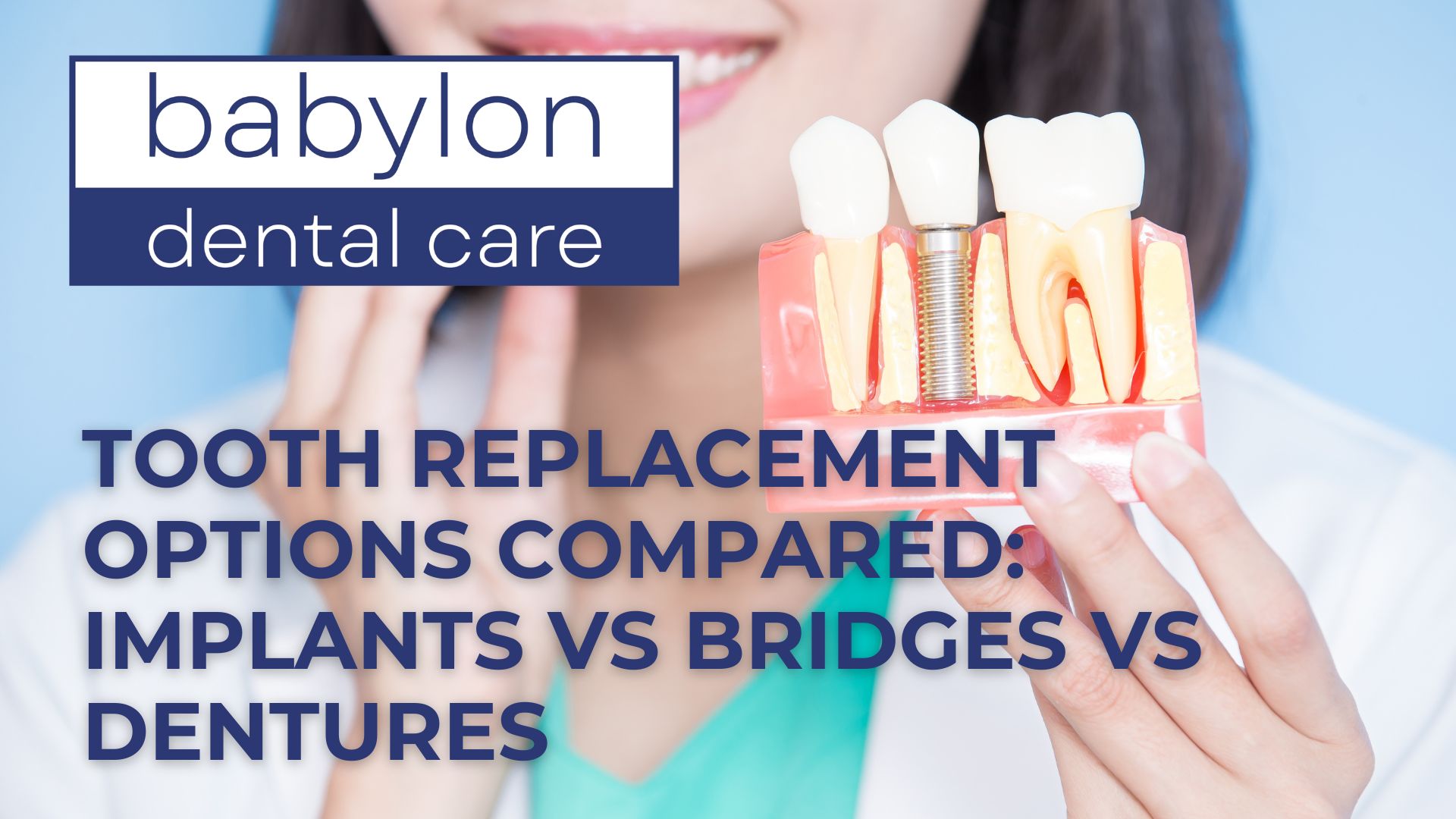
Losing a tooth can affect how you chew and how you speak. It can also completely change how you feel about yourself. Fortunately, you have several tooth replacement options, and each one solves the problem differently. Here is what you need to know so you can walk into your next appointment with confidence and ask the right questions.
Dental Implants vs Bridges vs Dentures: Side-by-Side Comparison
Each option for missing teeth functions differently. The most appropriate choice for you depends on your bone health, your budget, and how many teeth you need to replace.
What Is a Dental Implant?
A dental implant starts with a titanium post that a dentist places directly into your jawbone. Over the course of several months, the bone fuses to the post through a process called osseointegration. Once healed, the dentist attaches a custom crown on top. The result looks, feels, and functions like a natural tooth root.
What Is a Dental Bridge?
A dental bridge fills a gap using your neighboring teeth for support. The dentist reshapes the two teeth next to the gap (known as abutment teeth), then cements crowns onto them. A false tooth (called a pontic) sits between the crowns and fills the space.
What Are Dentures?
Dentures are removable appliances that replace some or all of your teeth. Partial dentures clip onto your remaining teeth and address partial edentulism. Full dentures rest on your gums and replace an entire arch. Both types come out for daily cleaning.
How Long Do Implants, Bridges, and Dentures Last?
Lifespan varies widely among these three options, and that difference matters when you weigh the true cost over time.
- Dental implant lifespan – The titanium post can last a lifetime with good care, though the crown on top usually needs replacement after 10 to 15 years.
- Dental bridge lifespan – Most bridges last five to 15 years before the abutment teeth or the connecting material start to wear down.
- Denture lifespan – Traditional dentures typically last 7 to 10 years and often need a denture relining sooner because your jawbone and gums change shape.
Which Tooth Replacement Option Protects Your Jawbone?
Your jawbone needs regular stimulation to stay strong. Each replacement option handles this differently.
When you lose a tooth root, the jawbone in that area starts to shrink. Dentists call this process alveolar bone resorption. Dentures sit on top of the gums and cannot stop it, so many denture wearers notice ongoing bone loss over time. This is one reason dentures often need relining or remaking every few years.
A dental bridge does not touch the jawbone, so it cannot slow bone loss in the missing tooth’s socket. Bridges also require enamel reduction on the two neighboring teeth. This permanently changes those teeth, even if they were healthy before treatment.
Dental implants work differently. The titanium post replaces the missing tooth root and continues to stimulate the jawbone—much like a natural root does. This can help prevent the sunken, aged look that missing teeth sometimes cause.
How to Choose the Right Tooth Replacement Option

The best tooth replacement option depends on a few key factors specific to your mouth and your goals.
- Bone health – A prosthodontist or dentist will check whether you have enough jawbone for an implant or need a bone graft first.
- Condition of nearby teeth – Bridges can make efficient use of dental work if the teeth next to your gap already need crowns.
- Budget and timeline – Dentures and bridges usually cost less upfront, while implants often prove more cost-effective over a 20-year span.
- Number of missing teeth – A single gap might call for an implant or bridge, while several missing teeth often point toward a denture.
FAQ
Here are the answers to some of the most common questions about tooth replacements:
What happens if you don’t replace a missing tooth?
Nearby teeth can drift into the open space and throw off your bite. The jawbone beneath will also continue to shrink, which can eventually change the shape of your face.
Can you get dental implants with bone loss?
Often, yes, though you may need a bone graft first to rebuild enough bone for the post to fuse properly.
Which tooth replacement option lasts the longest?
Implants generally win this comparison, since the titanium post rarely needs replacement once it fuses with the bone.
Contact us Today
When it comes to tooth replacements, no single option works best for everyone. The right fit depends on your bone health and your budget. The team at Babylon Dental Care can walk you through these options so that you can make a confident choice. Schedule a consultation to learn more about our restorative dentistry services.