
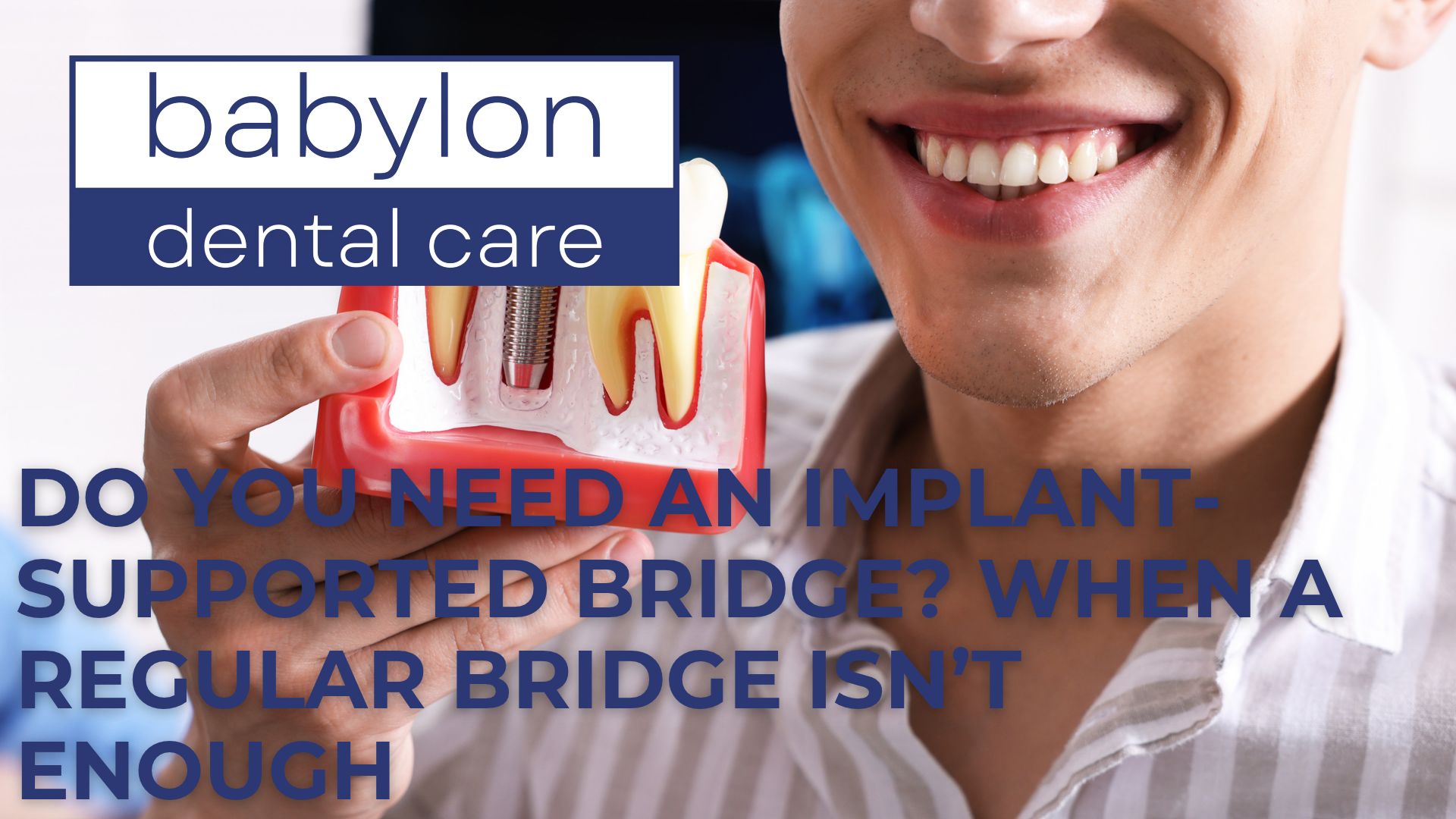
A traditional dental bridge can be an effective way to replace missing teeth. However, it isn’t always the best long-term solution. Depending on your oral health and the location of the gap, an implant-supported bridge may offer greater stability – and on top of that, it can help preserve your remaining natural teeth. The differences between these options can have a lasting effect on your dental health, so it’s important to make sure you’re choosing the right treatment.
Fortunately, your dentist can help you weigh your options. After they examine your teeth, gums, and jawbone, they can recommend a treatment that addresses your specific needs. They can also guide you through the process and perform the necessary work to restore your smile.
Traditional Bridge vs. Implant-Supported Bridge: The Key Difference
Both traditional and implant-supported bridges replace missing teeth with artificial teeth. However, they differ in how they attach to your mouth and where they get their support.
A traditional bridge relies on the natural teeth surrounding a gap. Your dentist reshapes these teeth to accommodate dental crowns, which anchor the bridge in place. One or more artificial teeth fill the space between the crowns. Traditional bridges generally work best when the teeth on either side of the gap are healthy and strong. They don’t require surgery to install, and treatment typically takes just a few weeks.
Rather than being attached to the neighboring teeth, an implant-supported bridge is attached to dental implants, which are small posts your dentist or oral surgeon places into your jawbone. They act as artificial tooth roots. Once the implants fuse with your jawbone, your dentist attaches a custom-made bridge. This creates a fixed bridge on implants that stays securely in place.
The main difference in the implant bridge vs. traditional bridge comparison is the source of support. Traditional bridges depend on the neighboring teeth, while implant-supported bridges rely on artificial roots embedded in your jawbone. Because the bone needs time to heal around the posts, the implant treatment also takes longer.
When a Regular Bridge Isn’t the Best Option
Traditional dental bridges work well for many patients, but they may be less suitable in certain circumstances. Your dentist may recommend an implant-supported bridge instead in situations like these:
- You Have Several Consecutive Missing Teeth – A traditional bridge spanning a large gap may place excessive pressure on the supporting teeth. Dental implants can provide additional support.
- The Neighboring Teeth Are Unhealthy – Teeth weakened by decay or gum disease may not provide a reliable foundation for a traditional bridge.
- There’s No Supporting Tooth on One Side – A traditional bridge generally requires natural teeth on both sides of the gap. Implants can support a bridge without this requirement.
- You’ve Experienced Repeated Bridge Failures –If your traditional bridge has repeatedly loosened or failed, an implant-supported bridge may offer a more suitable long-term solution. Your dentist can assess why the previous restorations failed and whether implants would address those problems.
Benefits for Your Bone, Bite, and Neighboring Teeth
An implant-supported bridge does more than fill gaps in your smile. Because dental implants function like artificial tooth roots, they offer several advantages over traditional bridges, which can make them a particularly attractive option for patients seeking a lasting restoration:
- Preserving Your Jawbone Health – When you lose a tooth, the lack of root stimulation causes the surrounding jawbone to gradually deteriorate. Dental implants help preserve bone density by transferring chewing forces into the jawbone. Traditional bridges don’t provide this benefit because they rest above the gums.
- Improving Your Bite Strength and Stability – Implants provide a stable foundation for replacement teeth. This allows you to chew comfortably without placing additional strain on the neighboring teeth. An implant-supported bridge can also help maintain proper tooth alignment and more evenly distribute biting forces.
- Protecting Your Natural Teeth – Traditional bridges require your dentist to remove enamel from the adjacent teeth to accommodate supporting crowns. An implant-supported bridge eliminates this requirement. Your remaining teeth stay intact, which reduces the risk of complications associated with reshaping otherwise healthy teeth.
Candidacy, Timeline, and What the Process Looks Like
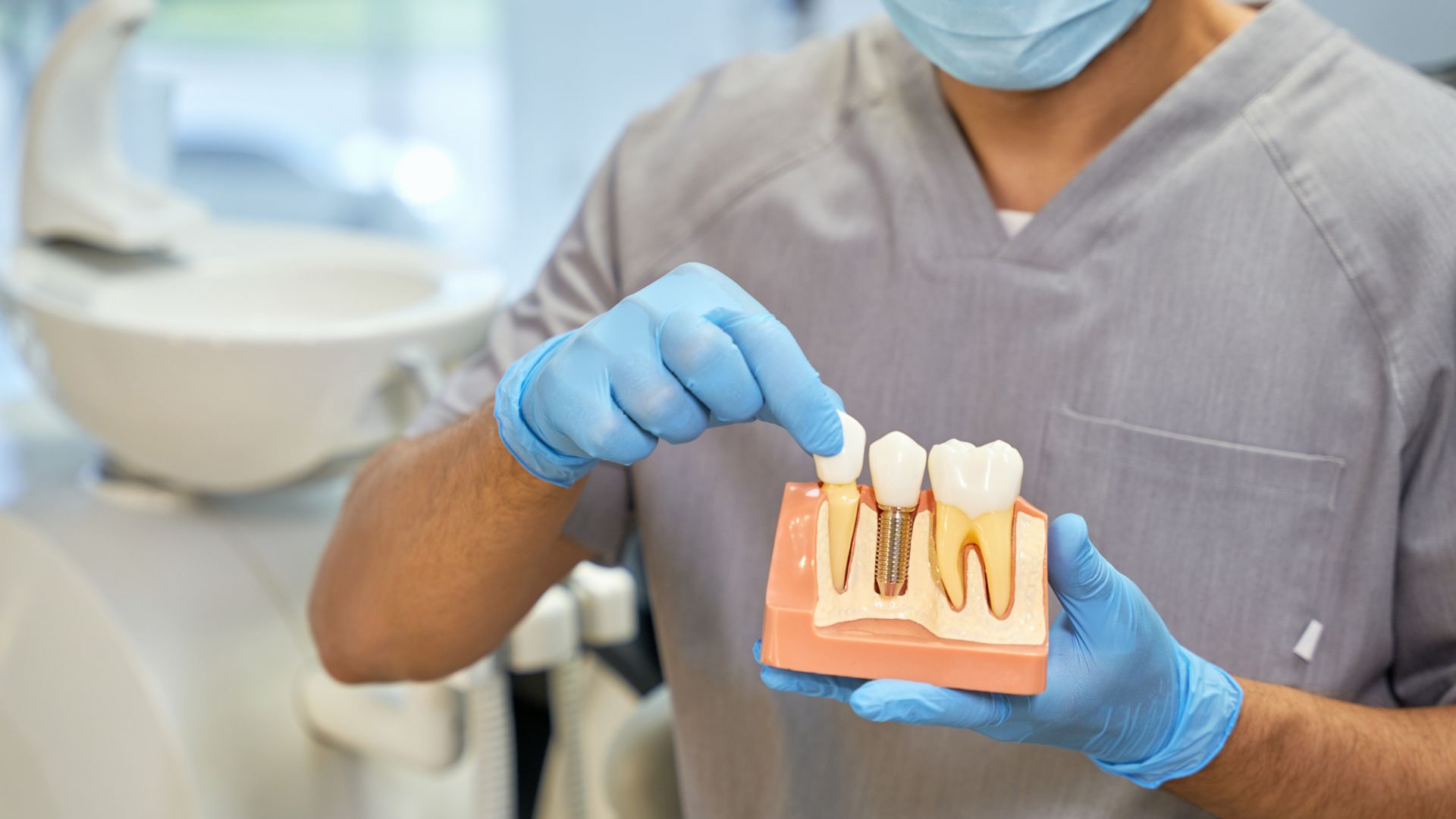
The implant bridge procedure involves several stages, from evaluating your oral health to placing your permanent restoration. Although treatment takes longer than a traditional bridge, with proper care, the results can last for many years.
Are You a Good Candidate for an Implant-Supported Bridge?
A good implant bridge candidate has healthy gums, adequate jawbone density, and good overall health. Your dentist will examine your mouth and review your medical history before recommending treatment.
Certain conditions may affect your eligibility for an implant-supported bridge. For example, uncontrolled diabetes and active gum disease can increase the risk of complications. Smoking can also interfere with healing. If you’ve experienced significant jawbone loss, your dentist may recommend bone grafting before receiving your implants. This procedure adds bone material to strengthen the jaw and create a suitable foundation.
What Happens During the Implant Bridge Procedure?
Your dentist will develop a treatment plan based on your oral health and the number of teeth you’re replacing. The process typically involves several steps:
- Initial Evaluation – Your dentist examines your teeth, gums, and jawbone. They may use X-rays or 3D imaging to plan implant placement.
- Implant Placement – Your dentist or oral surgeon surgically inserts titanium posts into your jawbone. The number of implants depends on your restoration.
- Healing – Over the following months, your jawbone gradually fuses with the implants through a process called osseointegration.
- Bridge Attachment – Once you’ve healed, your dentist attaches connectors called abutments and secures your custom-made bridge.
How Long Does Treatment Take?
The entire process generally takes several months, as implants typically need two to six months to fuse with the jawbone. Your timeline may be longer if you require additional procedures like bone grafting. Your dentist can provide a more accurate estimate after evaluating your needs.
Discuss Your Bridge Options with Babylon Dental Care
If you’re missing some teeth and looking into your options for replacing them, consider discussing an implant-supported bridge with a knowledgeable dentist. Babylon Dental Care has decades of experience supporting patients and helping them rediscover their smiles. We’d love to discuss your options with you. Call us at (631) 983-6665 or fill out our online contact form to schedule an appointment.